
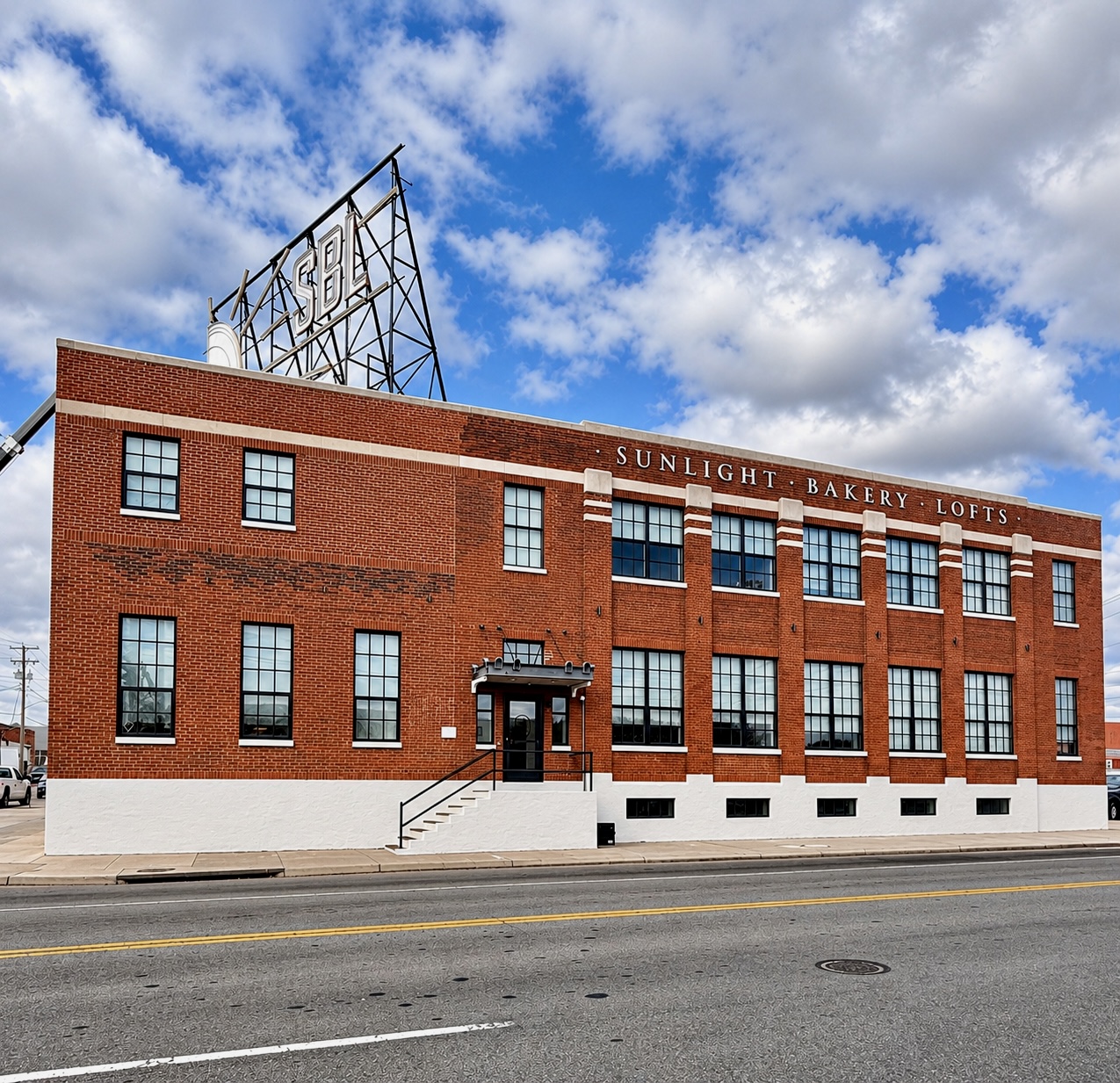
For decades, the former Sunlight Bakery building stood at the corner of Fifth Street and Salem Avenue SW as a reminder of Roanoke's industrial past. Once home to a busy commercial bakery, the property eventually fell into disrepair, remaining vacant for more than 30 years as redevelopment plans came and went.
Today, the building has entered a new chapter.
Roanoke Growth & Development recently toured the newly completed Sunlight Bakery Lofts with developer Bill Chapman, who discussed the challenges of restoring the historic property and preserving features that connect it to nearly a century of Roanoke history.
From bread production to a downtown landmark
The original Roanoke Sunlight Bakery opened in 1928, when Salem Avenue was an important commercial and industrial corridor.
The opening was a significant occasion. Historical advertisements in The Roanoke Times promoted the new facility as a modern bakery equipped with innovative machinery and production methods. Its products included Mother's Bread, pies and cakes, supplying businesses throughout the region.
The operation eventually became associated with American Bakeries Company, while later generations of Roanoke residents came to recognize the property as the Kroger Bakery.
By the early 1950s, the complex had grown beyond the original two-story building. An adjoining barrel-roofed structure served as a garage for approximately 26 trucks, believed to have been part of the bakery's delivery fleet.
The bakery operation continued until 1985, according to historical information submitted to the City of Roanoke. A vehicle repair business subsequently occupied the complex until the mid-1990s.
After that, the building sat empty.
Decades of vacancy and failed redevelopment plans
The property's current transformation was not its first proposed redevelopment.
In 2007, a previous owner sought to convert the former bakery into residential condominiums. The city approved a rezoning that year, but the project never materialized.
Another proposal followed in 2011, when a subsequent owner envisioned a phased redevelopment incorporating mixed commercial and industrial uses. At the time, the building had already suffered significant deterioration, including roof damage from fire and years of inadequate maintenance.
Those plans also failed to produce a completed rehabilitation.
By the time Chapman acquired the property through Sunlight Bakery Building LLC in 2025, it had become one of the more challenging remaining historic redevelopment opportunities near downtown.
According to Chapman, the property's decades of vacancy were only part of the problem. Successive occupants had altered the building repeatedly, creating a complicated collection of flooring materials, structural conditions and former industrial spaces.
Preserving the past while creating something new
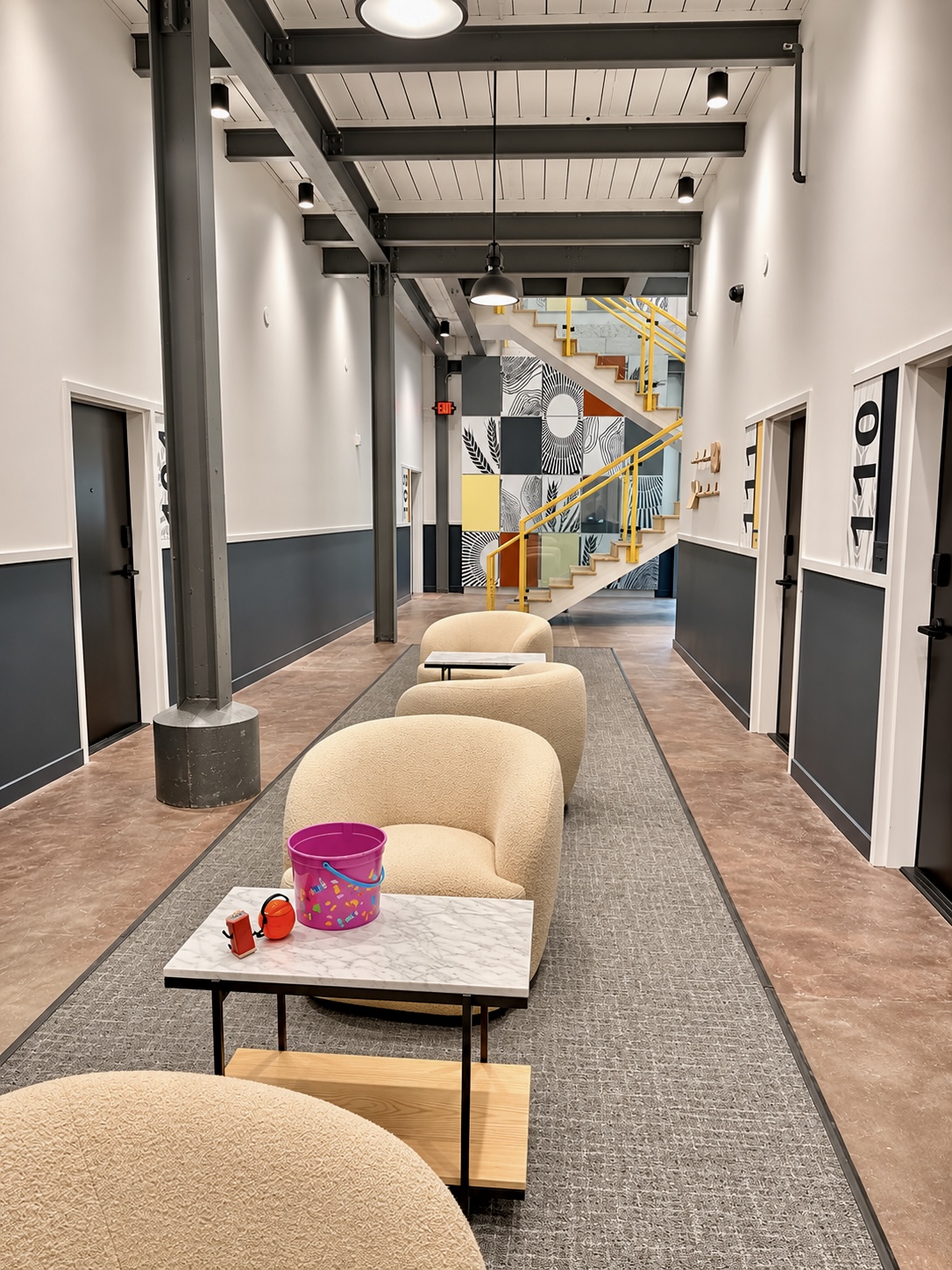
Work on the current redevelopment began in August 2025, with the goal of converting the property into 33 one-bedroom apartments while retaining its historic character.
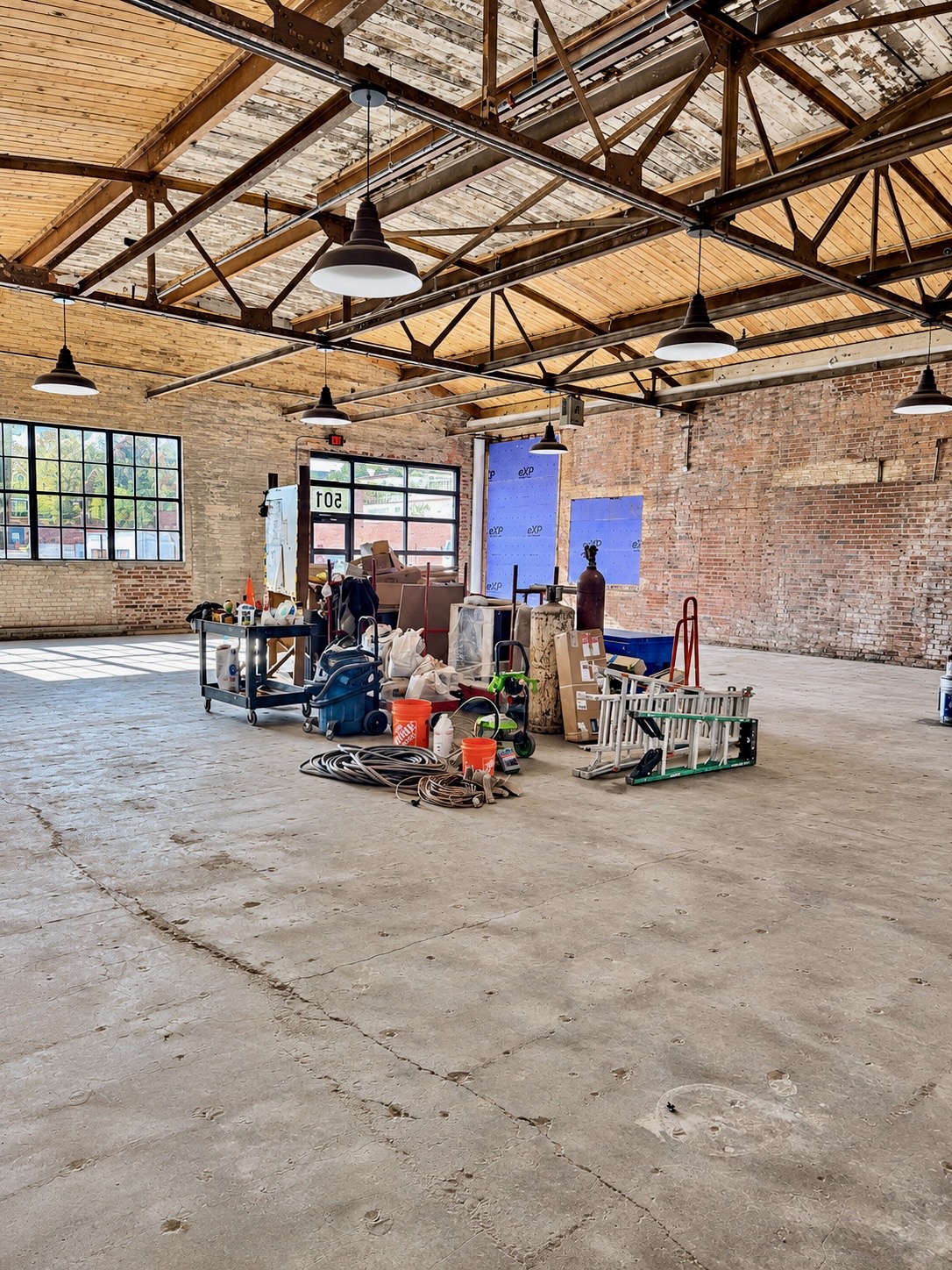
Chapman explained that the different phases of the building's history created unusual challenges during construction. Features added for bakery operations, vehicle storage and later industrial uses all had to be addressed during the rehabilitation.
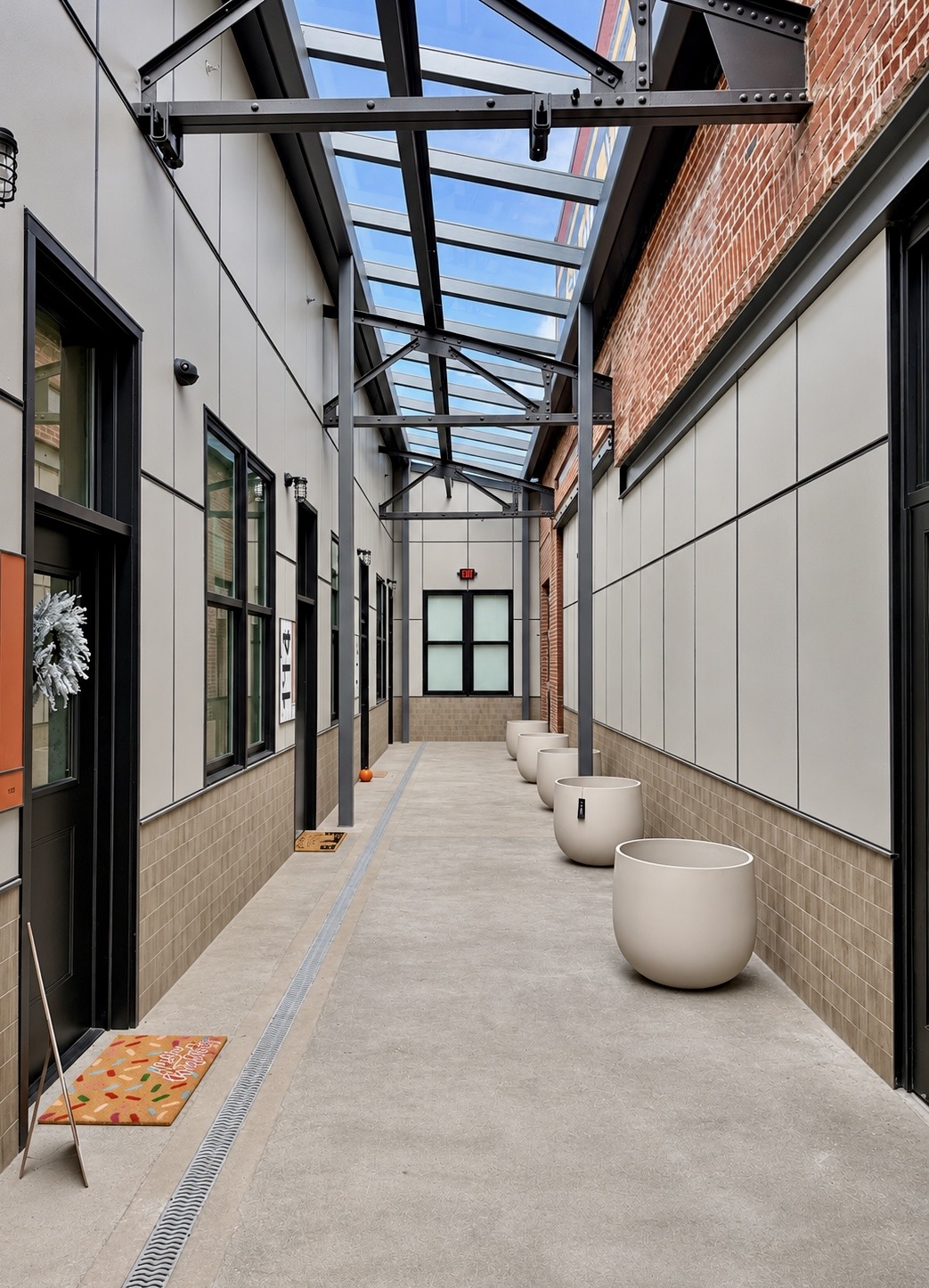
One of the most notable transformations involved the former delivery-fleet garage. The space has been reconfigured into an atrium-style residential area, incorporating four apartments within the redesigned structure.
Elsewhere, the renovation preserves elements of the original building, including historic concrete floors, exposed brick and other architectural features that reflect its industrial past.
The project received its final certificate of occupancy on October 13, 2026. According to Chapman, all 33 apartments have already been preleased.
Approximately 2,600 square feet of ground-floor commercial space also remains part of the property. Chapman said that portion has not yet been actively marketed, with the development team prioritizing completion of the residential units.
A rooftop sign with its own history
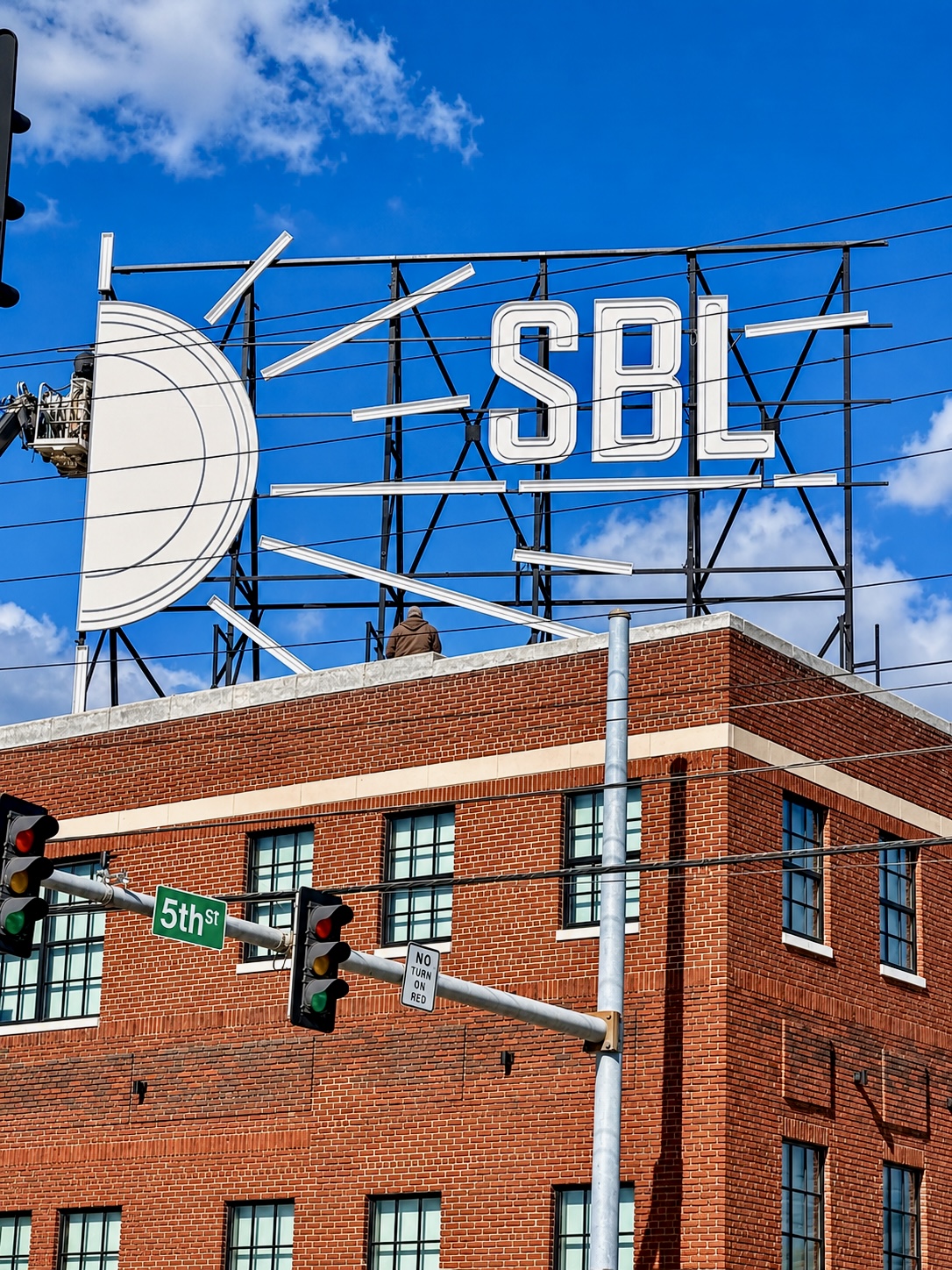
One of the building's most recognizable features is its rooftop bakery sign, which is also receiving new attention.
Chapman said the restoration required research into the sign's historical appearance and significance. The development team located archival documentation, including material dating to 1953, to establish the presence of the rooftop structure during the property's historic period.
That research was particularly important because the building is a contributing property within the Salem Avenue/Roanoke Automotive Commercial Historic District, where preservation standards play a role in rehabilitation work.
The restored sign is being equipped with lighting technology associated with Lebow Lighting Solutions, a company whose projects also include the prominent rooftop sign at the W Hotel Union Square in New York City. Chapman described the installation as a first of its kind in Virginia.
At the time of the tour, the team was hoping to have the sign illuminated again within the following two weeks.
For a property originally promoted in 1928 with references to its illuminated nighttime presence, the return of its rooftop sign would represent another connection between the building's past and present.
A new chapter for Salem Avenue
The completion of Sunlight Bakery Lofts also marks another step in the ongoing redevelopment of Salem Avenue west of Fifth Street.
Chapman has been involved in several nearby adaptive-reuse projects, including Fulton Motor Lofts and the Lofts at West Station. His latest project brings another 33 residential units to the area, along with commercial space that could eventually accommodate an additional business.
Nearby, restaurant activity is also returning to existing commercial spaces, including the planned Buddy Ray's pizza restaurant in the former Beamer's 25 location and METL, a new taco concept taking over the former Tuco's Taqueria.
For the Sunlight Bakery building, however, the most significant change may be its simplest: after more than three decades without occupants, a property that once served Roanoke's commercial economy is once again part of daily life downtown.
Nearly a century after opening as a modern bakery, the building has found a new purpose while retaining much of the history that made it recognizable in the first place.